
KONG JOURNAL · COMPACT TRACTOR OWNER GUIDE
Kubota LX2620: get the loader, ballast and attachments working together
A compact tractor earns its keep when the whole setup suits the job. Start with the exact model, then work out what goes on the front, what belongs behind it and what needs checking before work.
By Kong Journal ·
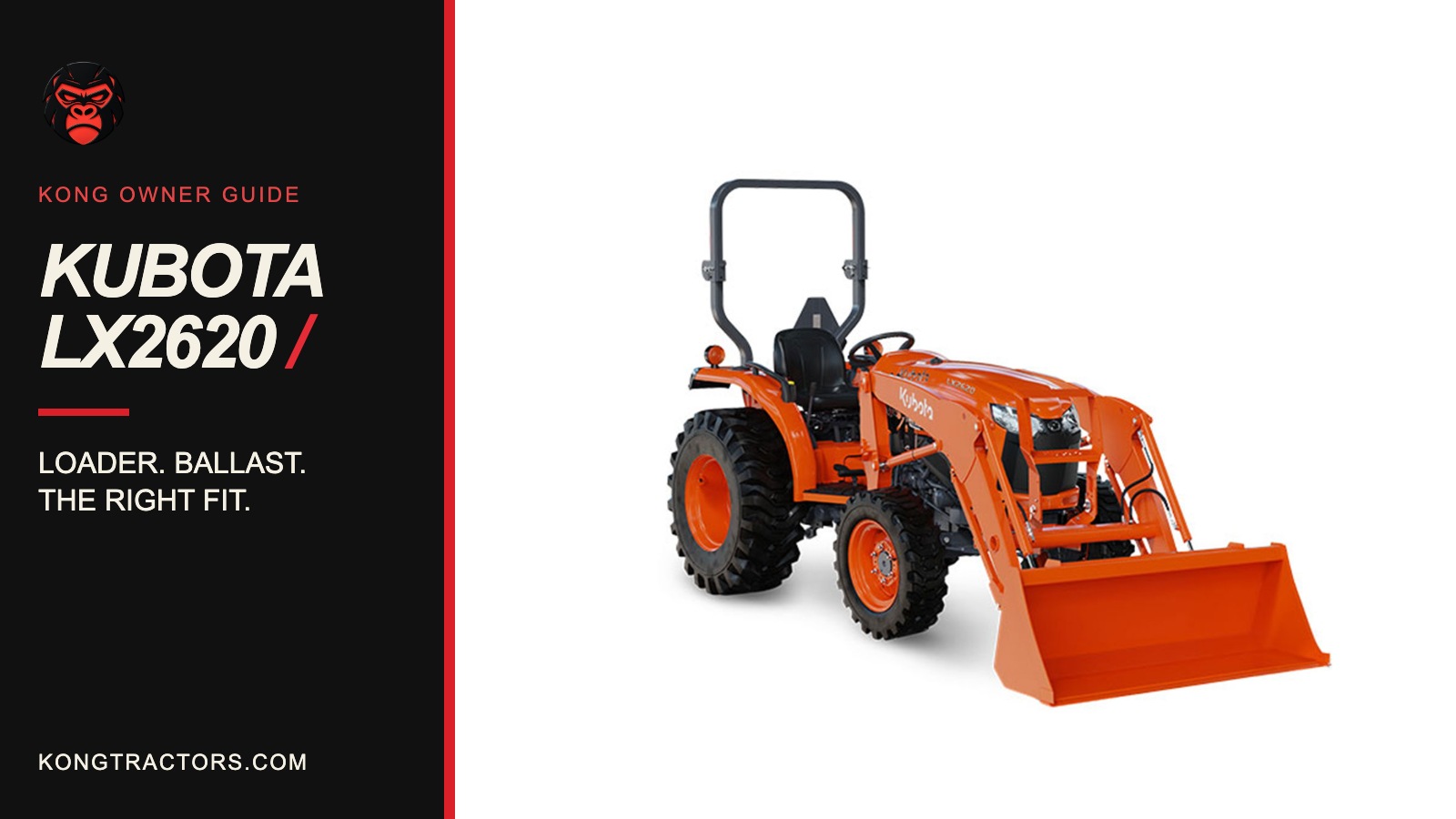
The LX2620 is worth a look for property maintenance, mowing and light material handling where a compact footprint matters. It is an existing model, not a new launch. This guide concentrates on the LX2620HSD open-station tractor; cab and SU versions need their own configuration check. Kong has not field-tested this machine.
1. Read engine power and implement power separately
Kubota Canada lists 23.3 gross engine horsepower and 19.4 PTO horsepower for the LX2620HSD, with three-range hydrostatic transmission, four-wheel drive and a Category I three-point hitch. Use the PTO figure when checking a PTO-powered implement’s requirement. A Category I hitch match alone does not establish that a mower, tiller or snowblower is suitable.
Useful habit: keep a setup sheet with the tractor model and serial number, loader model, tire size, attachment model and any hydraulic options. Photograph the identification plates before ordering parts or discussing fit.
2. The LA535 figure is a loader rating, not a pallet promise
The Canadian LX20 brochure matches the LX2620 with the LA535 loader. It lists 1,067 lb (484 kg) of lift at the pivot pin at maximum height, and 1,324 lb (601 kg) at the pivot pin at 1.5 m. These are different positions in the lift path. Neither number establishes a safe load at the tips of pallet forks.
For a fork or grapple proposal, have the supplier check attachment weight, load position, lift height and the exact machine configuration together. Keep the loader’s load information with the attachment paperwork. Avoid planning a material delivery around a pivot-pin figure alone.
3. Set ballast for the fitted machine and job
Kubota’s LX2620/LX2620SU operator manual says rear ballast should suit the work and be removed when unnecessary. It also cautions against exceeding tire loading limits. Use the tractor and fitted loader manuals together to establish the required setup with the dealer; a rear implement or filled tires should never be assumed to satisfy every loader requirement.
Useful habit: ask for the approved ballast arrangement in writing at handover and keep it with your setup sheet. Recheck the plan when changing attachments. This guide supplies no universal ballast weight or slope limit.
4. Match connections before buying an attachment
Kubota Canada lists the LA535 as an optional loader and provides a performance-matched attachment chart. Check the exact tractor column, mounting hardware and hydraulic requirements. For powered front tools, ask which valve, couplers and controls the proposed package needs; the presence of a loader valve does not confirm every extra function is fitted.
For rear tools, confirm hitch geometry, PTO requirements, driveline clearance and the implement’s weight and operating limits. A quick hitch adds another fit check. Have the supplier demonstrate compatibility on the actual combination before accepting it. For a mid-mount mower, confirm the deck and mounting kit for the exact variant rather than buying on cutting width alone.
Useful habit: put each attachment on a separate quote line with the required mounting and control kit. That makes missing parts visible before delivery.
5. Build a short check into every working day
The Kubota operator manual’s daily-check section covers engine and transmission oil levels, coolant, screens, brakes, indicators, lights, seat belt and ROPS. Its safety precautions apply throughout: park safely on level ground, lower equipment, stop the engine and remove the key before the relevant inspection or cleaning. Allow hot components to cool; never remove a hot radiator cap.
Keep the grille and radiator screen free of debris using the manual’s procedure. Grass and chaff make this especially relevant after mowing. With a cab, include the condenser screen. A quick visual check is useful, but does not replace the prescribed inspections.
The manual separates initial service from recurring intervals and includes calendar limits. Copy the schedule for the machine’s serial number into a service log, track hours and dates, and keep the loader and implement schedules alongside it. Do not assume the tractor’s grease interval applies to every loader pivot. The manual calls for more frequent lubrication in extremely wet or muddy conditions.
Where this tractor makes sense—and where to pause
For a Fraser Valley property owner with varied smaller jobs, the compact size and attachment choices make the LX2620 a useful candidate to demonstrate. That is an editorial assessment, not a capacity guarantee. If the regular job involves heavy pallets, demanding PTO equipment or awkward terrain, take the actual load and site information to the supplier before choosing the tractor.
Measure gates, storage access and the complete fitted machine. Arrange transport around the actual tractor, loader, attachment and ballast combination. Stock, Canadian pricing, dealer support and local service availability require direct confirmation.
Manufacturer sources and manual
- Kubota Canada: LX2620HSD specifications and attachment downloads.
- Kubota Canada: LX20/LX20N brochure — LA535/LX2620 matching and loader rating positions.
- Kubota-authored LX2620/LX2620SU operator manual, code 6C820-6311-2 — manufacturer document hosted by KubotaBooks; printed pp. 83, 92–94 and 100–104. Match the supplied manual to your serial number and configuration.
- Kubota USA: LX Series and exact LX2620 studio photo.
Sources checked November 11, 2026. Manufacturer figures are not Kong test results. Practical planning habits and suitability comments are Kong editorial analysis. Follow the manuals supplied with the tractor, loader and attachment.